












































In the first three editions of ERP Reality Check, we looked at the signs that a business has outgrown spreadsheets, whether SMEs really need ERP, and the hidden cost of running multiple disconnected systems.
The next concern is often just as important: will moving to ERP make the business even more complicated? Modern ERP should do the opposite.
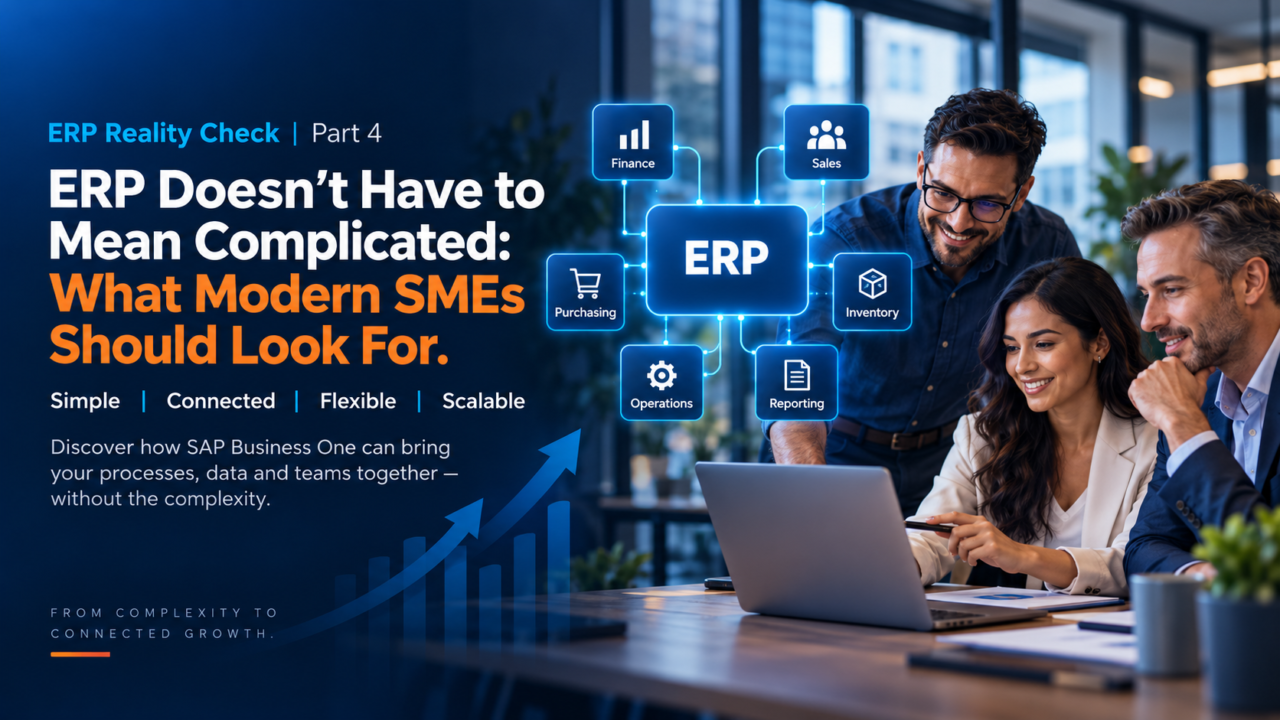
For a growing SME, the right system should simplify everyday work by bringing finance, sales, purchasing, inventory, operations and reporting together, while giving teams clearer information without adding unnecessary layers of process.
What Modern SMEs Should Look For
- One connected platform for core business functions instead of more disconnected applications.
- Real-time visibility and reporting so management is not waiting for manually consolidated numbers.
- Flexibility to adapt to existing workflows, industry requirements and future growth.
- Deployment options that fit the business – including cloud or on-premises approaches where appropriate.
- A structured implementation, practical user training and reliable ongoing support.
This is where SAP Business One can fit the needs of modern SMEs. It is designed to connect key processes and business data on one platform, with capabilities across finance, sales, purchasing, inventory, production and customer management, plus reporting and analytics.
It can also be extended and tailored as requirements evolve. The objective is not to force a growing business into a complicated system; it is to replace fragmented processes with a more consistent, scalable way of working.
ERP REALITY CHECK: ERP does not have to mean more complexity. The right ERP should remove complexity from the way your business operates – and make growth easier to manage.
Explore SAP Business One ERP for small and mid-sized businesses and see how a connected ERP platform can support your next stage of growth.
Continue the ERP Reality Check Series
If you have not read the earlier articles, start with Parts 1-3:
Part 1: 5 Signs Your Business Has Outgrown Spreadsheets
Part 2: Do Small and Mid-Sized Businesses Really Need an ERP?
Part 3: The Hidden Cost of Running Your Business on Multiple Systems