















































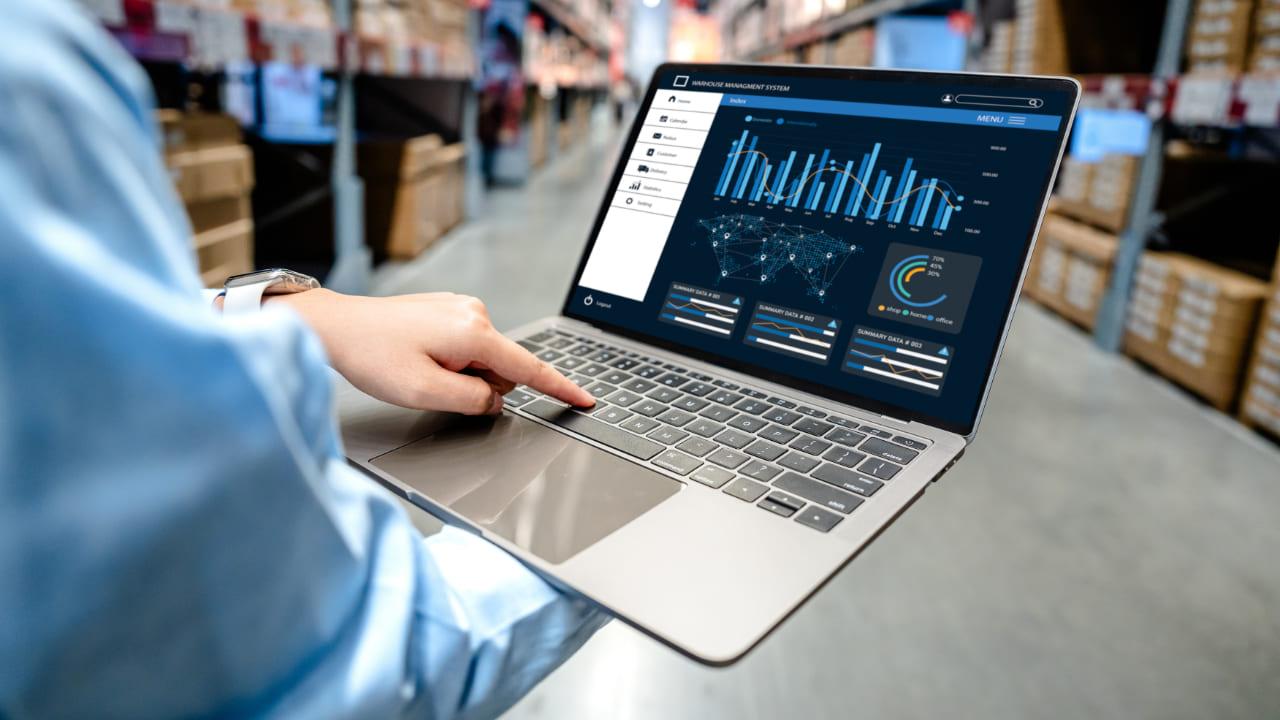
The logistics industry operates in an environment where speed, accuracy, visibility, and cost control directly influence profitability. From managing shipments and warehouses to coordinating vehicles, drivers, inventory, invoices, and customers, logistics companies handle a large volume of interconnected activities every day.
When these activities are managed through disconnected spreadsheets, legacy applications, or multiple standalone systems, businesses can struggle with data duplication, delayed reporting, inventory inaccuracies, inefficient routes, and rising operating costs.
This is where an ERP for the logistics industry can make a significant difference. A modern logistics ERP brings core business processes together on a unified platform, giving logistics companies greater control over operations and better visibility into their supply chain.
Solutions such as SAP Business One are increasingly considered by small and mid-sized logistics businesses because they combine financial management, inventory, purchasing, sales, warehouse management, reporting, and other business functions within an integrated environment.
Industry-focused implementations can also support transportation, fleet, and logistics-specific requirements through integrations and add-ons.
What Is ERP for Logistics?
An ERP system for logistics is business management software designed to connect the different functions involved in logistics and supply chain operations.
Instead of maintaining separate systems for accounting, inventory, order management, warehouse operations, transportation, and customer information, an ERP creates a centralized source of business data.
For example, when a shipment is dispatched, relevant inventory, sales, billing, and financial information can be updated as part of an integrated process. This reduces manual data entry and gives managers a more consistent view of business performance.
A logistics-focused ERP can help businesses manage areas such as:
- Inventory and warehouse management.
- Order and delivery management.
- Transportation and freight operations.
- Vehicle and driver information.
- Purchasing and supplier management.
- Sales and customer management.
- Billing and financial accounting.
- Shipment and material tracking.
- Business intelligence and reporting.
- Document and administrative processes.
Why Do Logistics Companies Need an ERP System?
Logistics businesses have to coordinate multiple moving parts simultaneously. A shipment may involve a customer order, warehouse availability, vehicle allocation, driver assignment, route planning, delivery documentation, invoicing, and payment.
Without an integrated logistics ERP platform, information can become fragmented across departments. This makes it harder to answer basic but important questions:
- Where is a shipment right now?
- What inventory is available at each warehouse?
- Which vehicles are being underutilized?
- What is the cost of a particular shipment or route?
- Which invoices are pending?
- Are customer orders being delivered on time?
- Which logistics activities are contributing most to profitability?
An integrated ERP for logistics company operations can bring this information together and help management make faster, data-driven decisions.
Key Benefits of ERP for Logistics Companies
- Centralized Data and Better Visibility
The biggest advantage of logistics ERP software is centralized information.
Instead of relying on separate databases and spreadsheets, departments can work with information stored in a unified system. Finance can access relevant transaction information, warehouse teams can monitor inventory, and managers can review operational performance through reports and dashboards.
This improved visibility can help identify bottlenecks earlier and support more informed decisions. SAP Business One, for example, combines financials, inventory, purchasing, sales, and other business functions within one system.
- Improved Inventory and Warehouse Management
Inventory accuracy is essential for logistics companies. Poor visibility can result in stockouts, overstocking, misplaced goods, delayed orders, and unnecessary handling costs.
An ERP software for logistics industry can provide real-time visibility into stock levels, warehouse locations, goods movements, and transactions.
Depending on the solution and implementation, businesses can manage:
- Multiple warehouses.
- Storage locations and bins.
- Stock transfers.
- Goods receipts and issues.
- Serial and batch numbers.
- Pick-and-pack processes.
- Stock reservations.
- Replenishment requirements.
SAP Business One implementations can support warehouse processes down to storage-location and bin-level management, while serial and batch tracking can improve traceability.
- Better Transportation and Fleet Management
Transportation is one of the most important cost and performance areas for logistics businesses.
A suitable transportation ERP software solution can help companies manage vehicle information, drivers, routes, trips, freight, fuel-related information, and transportation documentation.
For example, logistics-focused SAP Business One solutions can be extended to support vehicle and driver management, route management, trip management, fleet information, and transportation-related processes.
Better visibility into fleet utilization can help businesses identify underused assets, improve allocation, and control transportation expenses.
- Route and Delivery Optimization
Delivery delays can affect customer satisfaction as well as operating costs. Inefficient routes can increase fuel consumption, vehicle utilization, driver hours, and delivery times.
An ERP system for logistics company operations can bring order, inventory, transportation, and delivery information together so that teams can coordinate shipments more efficiently.
Some logistics ERP implementations can also integrate with route planning, fleet tracking, and other specialized transportation applications. This creates an ecosystem where the ERP serves as the central business platform while specialized systems provide additional logistics capabilities.
- Automation of Routine Processes
Manual processes consume employee time and increase the possibility of errors.
A modern ERP system for logistics can automate repetitive activities such as:
- Invoice generation.
- Order processing.
- Inventory updates.
- Document creation.
- Data entry.
- Approval workflows.
- Reporting.
- Reconciliation.
For example, an integrated ERP can connect shipment completion with billing processes, reducing manual intervention between operational and finance teams.
Automation allows employees to spend less time maintaining records and more time focusing on customers, operations, and business improvement.
- Reduced Operating Costs
Cost management is a constant priority for logistics companies because transportation, warehousing, labor, fuel, inventory, and administrative expenses can quickly affect margins.
A logistics ERP can help reduce unnecessary costs by improving resource utilization, minimizing duplicate work, improving inventory visibility, and providing better insight into operational expenses.
SAP Business One-related logistics implementations highlight areas such as inventory visibility, supply chain coordination, supplier comparison, operational efficiency, and reporting as opportunities for cost control.
The objective isn’t simply to reduce costs across the board. It is to understand where money is being spent and use reliable data to improve resource allocation.
- Stronger Financial Control
Logistics operations and financial management are closely connected. Every shipment has financial implications, from freight costs and fuel expenses to customer billing and receivables.
An integrated ERP for logistics company can connect operational transactions with finance, helping businesses gain a more complete view of revenue, expenses, receivables, and profitability.
Managers can analyze financial and operational information together rather than waiting for separate departments to consolidate data manually.
This can make it easier to monitor profitability by customer, location, route, shipment, or business segment, depending on the ERP configuration and reporting capabilities.
- Real-Time Tracking and Traceability
Customers increasingly expect accurate information about their shipments. Internally, logistics managers also need visibility into inventory and goods in transit.
An ERP for the logistics industry can support traceability by maintaining records of goods movements, warehouse transactions, serial numbers, batch information, shipments, and related documents.
For businesses handling sensitive or high-value goods, improved traceability can also help reduce the risk of misplaced inventory and make it easier to investigate discrepancies.
- Better Customer Service
Customer experience in logistics is closely connected to reliability and transparency.
When employees have access to accurate order, shipment, inventory, and billing information, they can respond to customer queries more quickly.
A logistics ERP can also integrate customer relationship management with sales, service, inventory, and financial information. This gives customer-facing teams a more complete view of their interactions and transactions. SAP Business One includes customer and sales management capabilities alongside its core business functions.
The result can be faster communication, fewer information gaps, and more consistent customer service.
- Data-Driven Decision-Making
Logistics companies generate enormous amounts of operational data. The real challenge is turning that data into useful business insights.
With logistics ERP software, management can use dashboards, reports, analytics, and KPIs to monitor business performance. Important metrics may include:
- Delivery performance.
- Inventory turnover.
- Vehicle utilization.
- Freight costs.
- Order fulfilment.
- Warehouse performance.
- Customer profitability.
- Receivables.
- Route performance.
- Operational expenses.
Real-time analytics and customizable reporting are among the capabilities associated with SAP Business One and modern ERP environments.
Why SAP Business One for the Logistics Industry?
For small and mid-sized organizations, SAP Business One for logistics industry applications can provide an integrated foundation for managing core business processes.
SAP Business One brings together functions such as financial management, purchasing, inventory, sales, customer management, reporting, and analytics. Logistics-specific capabilities can be supported through configuration, integrations, and industry add-ons.
For logistics businesses, this can translate into:
- Better operational visibility.
- Integrated finance and logistics data.
- Improved inventory control.
- Warehouse management.
- Shipment and material traceability.
- Transportation and fleet integrations.
- Automated business processes.
- Real-time reporting.
- Scalability as operations grow.
The right implementation is important, however. Every logistics company has different requirements based on its business model, fleet structure, warehouse network, customer base, geographic coverage, and regulatory environment.
What Should You Look for in ERP Software for the Logistics Industry?
Before selecting an ERP system for logistics, businesses should evaluate whether the solution can address both current and future requirements.
Key considerations include:
Industry-Specific Functionality
The ERP should support logistics processes rather than forcing the company to redesign every workflow around generic software.
Integration Capabilities
The solution should be able to integrate with relevant systems such as fleet management, warehouse management, GPS/tracking platforms, e-commerce systems, banking platforms, and other operational applications where required.
Scalability
As shipment volumes, warehouses, customers, employees, and locations increase, the ERP should be able to scale with the organization.
Reporting and Analytics
Look for dashboards and reporting capabilities that help management monitor operational and financial KPIs.
Mobile Accessibility
Logistics teams often work outside the traditional office environment. Mobile access can help employees capture and retrieve information closer to the point of activity.
Security and Controls
The ERP should provide appropriate user access controls, auditability, data protection, and backup capabilities.
Implementation and Support
Technology alone does not guarantee success. A capable implementation partner can help map processes, configure the system, integrate third-party applications, migrate data, train employees, and provide ongoing support.
ERP for Logistics: A Strategic Investment
An ERP is more than an accounting or inventory application. For logistics companies, it can become the digital backbone connecting operations, finance, warehouses, transportation, customers, and management.
By replacing fragmented processes with an integrated platform, companies can improve visibility, automate routine work, control costs, strengthen inventory management, and make faster decisions.
Whether you are evaluating ERP for logistics, logistics ERP software, ERP software for logistics industry, or a specialized ERP system for logistics, the focus should remain on business outcomes.
The best solution is one that fits your operational model, integrates with your existing technology ecosystem, and can evolve as your logistics business grows.
Final Thoughts
The logistics industry cannot afford delays caused by disconnected systems and inaccurate information. As shipment volumes increase and customers demand faster, more transparent service, businesses need technology that can connect operations from warehouse to delivery and from order to payment.
A well-implemented ERP system for logistics can provide that foundation. It can bring together inventory, warehouse operations, transportation, finance, sales, customer management, and analytics to create a more connected and efficient organization.
For businesses considering SAP Business One for logistics industry, choosing the right implementation partner is just as important as choosing the right ERP solution. Accelon Technologies is an experienced SAP Business One consulting and implementation partner, helping businesses evaluate their requirements, configure the solution around their processes, integrate relevant systems, and implement SAP Business One effectively.
With the right combination of SAP Business One and industry-focused expertise, logistics companies can gain better visibility, streamline operations, improve cost control, and build a scalable technology foundation for sustainable growth. Accelon Technologies can support logistics businesses throughout their ERP journey – from consulting and implementation to optimization and ongoing support.