












































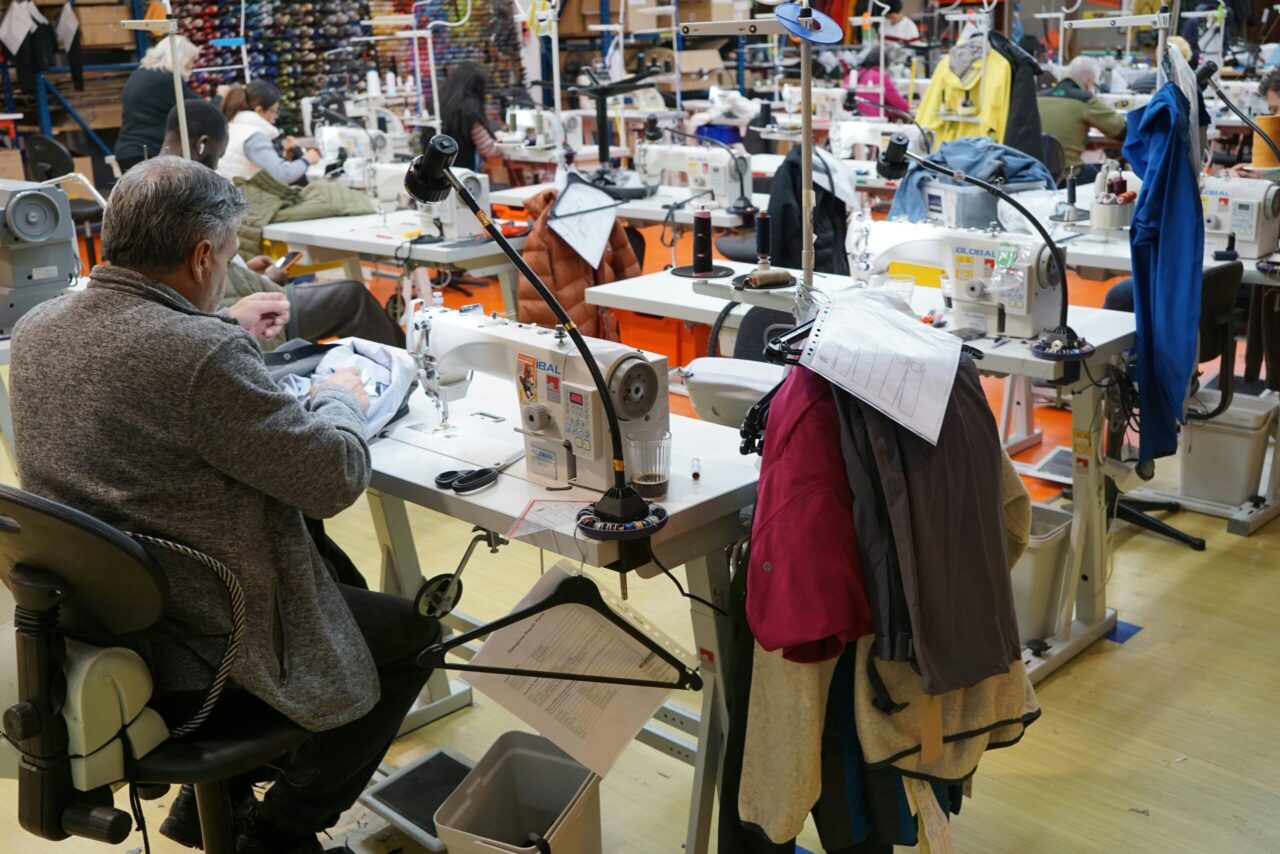
The garment manufacturing industry operates in one of the most demanding manufacturing environments. Short production cycles, changing fashion trends, seasonal demand, multiple product variants, tight delivery schedules, and complex supply chains make it difficult for manufacturers to maintain efficiency while controlling costs.
A single garment style can involve multiple sizes, colors, fabrics, trims, and production stages. At the same time, manufacturers must coordinate raw material procurement, cutting, stitching, finishing, quality checks, packing, and dispatch. When these processes are managed using spreadsheets or disconnected applications, even small data gaps can create significant operational problems.
Industry research highlights challenges such as SKU proliferation, seasonal demand, production planning, outsourcing, and supply-chain coordination as recurring issues for apparel manufacturers.
This is where ERP software for the garment manufacturing industry can make a significant difference. By connecting inventory, purchasing, production, sales, finance, and reporting, an ERP system can give garment manufacturers better control over their operations and the information needed to make faster decisions.
In this blog, we’ll explore the major ERP challenges faced by garment manufacturers and how an integrated ERP approach can help address them.
Why Garment Manufacturing Requires Specialized ERP Capabilities
Garment manufacturing is different from many conventional manufacturing environments.
A typical apparel business may need to manage:
- Multiple styles and collections.
- Size and color variants.
- Different fabrics and trims.
- Seasonal products.
- Buyer-specific requirements.
- Multiple production stages.
- Subcontracting and job work.
- Tight delivery schedules.
- Fabric and material wastage.
- Quality control requirements.
- Multiple warehouses and locations.
A single style can generate dozens or even hundreds of SKU combinations when sizes and colors are considered. This makes inventory planning, costing, production scheduling, and order fulfillment considerably more complex.
A suitable garment manufacturing ERP software solution therefore needs to provide more than basic accounting and inventory functionality. It should connect commercial, manufacturing, warehouse, and financial processes so that information flows seamlessly throughout the organization.
Common ERP Challenges in the Garment Manufacturing Industry
- Managing Multiple Styles, Sizes, and Colors
One of the biggest challenges in apparel manufacturing is product variation.
A single garment design may be produced in several:
- Sizes
- Colors
- Fabrics
- Patterns
- Finishes
- Seasonal collections
Managing these combinations manually can result in duplicate item records, incorrect stock information, and difficulties tracking demand.
How ERP Helps
An ERP platform can centralize product and inventory information, allowing manufacturers to organize item data and track stock more effectively.
With SAP Business One, for example, businesses can manage item master data, inventory transactions, batch and serial information, inventory transfers, and inventory reporting from an integrated platform.
For garment manufacturers, appropriate configuration and extensions can help adapt these capabilities to style, size, color, and other apparel-specific requirements.
- Complex Inventory Management
Inventory is one of the most critical areas in garment manufacturing.
Manufacturers need to manage not only finished garments but also:
- Fabrics
- Threads
- Buttons
- Zippers
- Labels
- Packaging materials
- Accessories
- Work-in-progress inventory
Poor inventory visibility can result in excess materials, stock shortages, production interruptions, and unnecessary carrying costs.
Manual inventory tracking can make it difficult to determine exactly how much material is available, committed, in production, or required for upcoming orders.
How ERP Helps
ERP for garment manufacturing can provide a centralized view of inventory across warehouses and production locations.
An ERP system can help manufacturers:
- Track raw materials and finished goods.
- Monitor stock movements.
- Manage warehouse transfers.
- Track batch information where required.
- Perform inventory counts.
- Monitor available and committed inventory.
- Improve inventory reporting.
SAP Business One supports inventory transactions including goods receipts, goods issues, inventory transfers, inventory counts, and inventory reporting.
- Fabric Wastage and Material Consumption
Fabric represents a significant cost for many garment manufacturers. Even small variations in consumption or cutting efficiency can affect production costs and profitability.
Challenges can arise when manufacturers don’t have accurate visibility into:
- Planned material consumption.
- Actual consumption.
- Fabric wastage.
- Production requirements.
- Material availability.
How ERP Helps
An integrated ERP system can connect production requirements with inventory and purchasing information.
Manufacturers can use bills of materials and production orders to define required components and monitor actual material consumption.
SAP Business One supports production bills of materials, production orders, material issues, finished-goods receipts, and production cost tracking.
This creates a stronger foundation for monitoring material usage and identifying production variances.
- Production Planning and Scheduling
Garment factories often operate under strict delivery deadlines. Delays at one stage can affect the entire production schedule.
Production may involve:
Fabric → Cutting → Stitching → Embroidery/Printing → Finishing → Quality Control → Packing → Dispatch
Coordinating these stages manually makes it difficult to identify bottlenecks or determine the current status of an order.
How ERP Helps
A manufacturing ERP provides greater visibility into production orders, materials, and production status.
SAP Business One enables businesses to create production orders, define bills of materials, issue components, receive finished products, and track production costs. Production orders can also be generated based on sales orders or MRP recommendations.
This helps manufacturers connect customer demand with production requirements and inventory availability.
- Managing Changing Customer and Product Requirements
Fashion and apparel businesses frequently deal with product changes.
A buyer may request changes to:
- Fabric.
- Color.
- Size ratios.
- Embroidery.
- Printing.
- Packaging.
- Labels.
- Delivery quantities.
If product specifications are maintained across emails, spreadsheets, and separate systems, there’s a risk that outdated information reaches procurement or production.
How ERP Helps
An integrated system creates a centralized source of operational information.
When properly configured, an ERP can connect product information, sales orders, purchasing, inventory, and production processes so that departments work with consistent data.
This reduces dependency on manual communication and helps improve coordination between merchandising, procurement, production, warehouse, and finance teams.
- Demand Forecasting and Seasonal Production
Fashion businesses are heavily influenced by seasons, trends, customer preferences, and market demand.
Producing too much can result in:
- Excess inventory.
- Obsolete styles.
- Increased storage costs.
- Discounting and markdowns.
Producing too little can result in:
- Stockouts
- Missed sales.
- Production rushes.
- Delayed deliveries.
Forecasting is therefore a major challenge in the apparel industry.
How ERP Helps
ERP systems can consolidate historical sales, inventory, purchasing, and production information.
This gives management better data for:
- Identifying sales trends.
- Planning procurement.
- Estimating material requirements.
- Reviewing product performance.
- Planning production capacity.
When integrated with appropriate planning tools and processes, ERP can help businesses move from reactive production planning toward more data-driven decision-making.
- Managing Subcontracting and Job Work
Garment manufacturing frequently involves external partners for activities such as:
- Cutting.
- Stitching.
- Embroidery.
- Washing.
- Printing.
- Finishing.
- Packing.
Managing these outsourced processes creates additional complexity because materials may move between the factory and external vendors while production continues.
How ERP Helps
An ERP system can provide greater visibility into purchasing, inventory movements, production activities, and vendor transactions.
This can help businesses maintain better records of:
- Materials issued to vendors.
- Quantities received back.
- Production status.
- Vendor costs.
- Pending work.
- Delivery commitments.
For manufacturers with significant subcontracting operations, ERP workflows may need to be configured or extended to reflect the company’s specific job-work processes.
- Managing Multiple Warehouses and Locations
Growing garment manufacturers may operate several warehouses, factories, branches, or distribution locations.
Managing stock across these locations can create challenges such as:
- Incorrect stock allocation.
- Duplicate records.
- Delayed transfers.
- Excess stock in one location and shortages in another.
- Difficulty identifying available inventory.
How ERP Helps
A centralized ERP platform enables warehouse-level inventory tracking and inventory transfers.
SAP Business One supports inventory transfers, inventory counts, warehouse-related processes, and inventory reporting.
This provides a more reliable foundation for managing inventory across locations.
- Quality Control and Traceability
Quality plays a critical role in garment manufacturing, particularly when serving large retailers, brands, and export customers.
Quality problems can lead to:
- Rework.
- Rejections.
- Returns.
- Delivery delays.
- Increased production costs.
- Customer dissatisfaction.
How ERP Helps
An integrated ERP environment can connect inventory, production, purchasing, and sales information, helping organizations establish better traceability and accountability.
Where required, batch and serial tracking can provide additional visibility into inventory movements. SAP Business One supports batch and serial number management as part of its inventory functionality.
For garment businesses, quality workflows may also be integrated with specialized quality-management or production applications depending on operational requirements.
- Order Fulfillment and Delivery Delays
Apparel buyers often operate with strict delivery schedules.
When sales, production, and warehouse teams don’t have access to the same information, manufacturers may struggle to answer important questions:
- Has the order entered production?
- Are raw materials available?
- How much has been completed?
- Is the order ready for inspection?
- How much remains to be packed?
- Can the committed delivery date still be achieved?
How ERP Helps
ERP connects sales orders with inventory and production information.
This gives teams greater visibility into order status and helps them identify potential delays earlier.
With SAP Business One, production orders can be created based on sales orders or MRP recommendations, helping connect demand with manufacturing activities.
How SAP Business One and FashionNX Can Support Garment Manufacturers
SAP Business One provides core ERP functionality across financial management, sales, purchasing, inventory, and production. For garment manufacturers, FashionNX extends these capabilities with industry-specific functionality designed around the unique requirements of apparel and fashion manufacturing.
SAP Business One provides production capabilities such as bills of materials, production orders, material issues, finished-goods receipts, and production cost tracking. Its inventory functionality includes item master data, inventory transactions, inventory transfers, inventory counting, batch and serial number management, and inventory reporting.
FashionNX builds on this foundation with capabilities specifically relevant to garment manufacturers, including:
- Style and collection management.
- Size and color management.
- Product lifecycle management.
- Tech pack management.
- Apparel-specific BOMs and production routings.
- Merchandising and sales management.
- Material and production planning.
- Time & Action planning.
- Raw material sourcing.
- Shop-floor production management.
- Quality control and inspection.
- Rework and alteration management.
- Fashion-specific inventory management.
This combination allows garment manufacturers to manage their core business operations and industry-specific processes within a connected ERP environment.
For example, a garment manufacturer’s workflow can connect:
Style Creation → Tech Pack → Sales Order → Material Planning → Procurement → Raw Material Inventory → Production → Quality Control → Finished Goods → Delivery → Finance
Instead of managing each stage through separate spreadsheets or applications, businesses can create a more connected flow of information across departments.
Why This Combination Matters for Garment Manufacturers?
While SAP Business One provides the core ERP capabilities, FashionNX addresses the specialized requirements that make garment manufacturing different from conventional manufacturing.
For example, a garment manufacturer may need to manage one style across multiple sizes and colors, track fabric and trim requirements, monitor production activities, manage buyer-specific requirements, coordinate sampling and production timelines, and track quality at different stages.
FashionNX helps address these fashion-specific workflows while SAP Business One provides the underlying ERP infrastructure for finance, purchasing, inventory, sales, and business management.
How to Overcome ERP Challenges in Garment Manufacturing
Implementing an ERP alone isn’t enough. Successful digital transformation requires a structured approach that combines the right technology with well-defined processes and user adoption.
- Map Existing Processes
Document the complete workflow from product development and order receipt to material planning, procurement, production, quality control, dispatch, and invoicing.
With FashionNX, businesses should also map fashion-specific processes such as style creation, tech packs, sampling, merchandising, Time & Action, and production planning.
- Identify Process Gaps
Determine where spreadsheets, manual approvals, duplicate data entry, disconnected applications, and manual reporting are creating inefficiencies.
Identify which processes can be standardized and automated through SAP Business One and FashionNX.
- Define Garment-Specific Requirements
A successful ERP implementation should account for the unique requirements of garment manufacturing.
Consider areas such as:
- Styles and collections.
- Size and color combinations.
- Fabrics and trims.
- Tech packs.
- BOMs and routings.
- Material planning.
- Apparel costing.
- Production stages.
- Subcontracting and job work.
- Quality inspections.
- Rework and alterations.
- Seasonal production.
- Buyer-specific requirements.
- Time & Action tracking.
- Clearly defining these requirements helps ensure the solution is configured around actual business processes.
Unlike disconnected software, SAP B1 ERP provides a unified view of your entire business, enabling smarter decisions and streamlined operations.
Whether you’re in manufacturing, wholesale distribution, retail, or professional services, SAP Business One adapts to your unique business needs and supports long-term growth.
- Clean and Standardize Data
Before implementation, review and standardize:
- Item masters.
- Style masters.
- Size and color attributes.
- Customer records.
- Supplier information.
- BOMs
- Warehouses
- Production routings.
- Inventory data.
- Historical transactions.
Clean and standardized master data provides a stronger foundation for SAP Business One and FashionNX.
- Integrate Departments
Ensure that merchandising, sales, procurement, inventory, production, quality, warehouse, and finance teams work with connected information.
The objective should be to create a single flow of information rather than isolated departmental systems.
- Train Users
Employees should understand not just how to use SAP Business One and FashionNX but also why standardized processes are important.
Role-based training can help improve adoption across departments and ensure that users understand how their activities affect downstream processes.
- Monitor and Optimize
ERP implementation is not the end of the transformation journey.
After go-live, businesses should continuously evaluate:
- System performance.
- User adoption.
- Production efficiency.
- Inventory accuracy.
- Reporting requirements.
- Workflow effectiveness.
- Data quality.
- Business KPIs.
Regular optimization can help ensure that SAP Business One and FashionNX continue to support changing business requirements.
Final Thoughts
Garment manufacturers face challenges such as complex product variants, seasonal demand, material management, production deadlines, quality control, and margin pressure. Managing these through spreadsheets and disconnected systems can limit visibility and increase manual effort.
The right ERP for garment manufacturing connects sales, merchandising, purchasing, inventory, production, quality, warehouse operations, and finance in one integrated environment.
SAP Business One provides the core ERP foundation, while FashionNX adds industry-specific capabilities such as style management, tech packs, merchandising, production planning, Time & Action, quality management, and fashion-focused inventory processes.
Together, SAP Business One and FashionNX help garment manufacturers improve visibility, streamline operations, reduce manual work, and build a scalable foundation for sustainable growth.