







































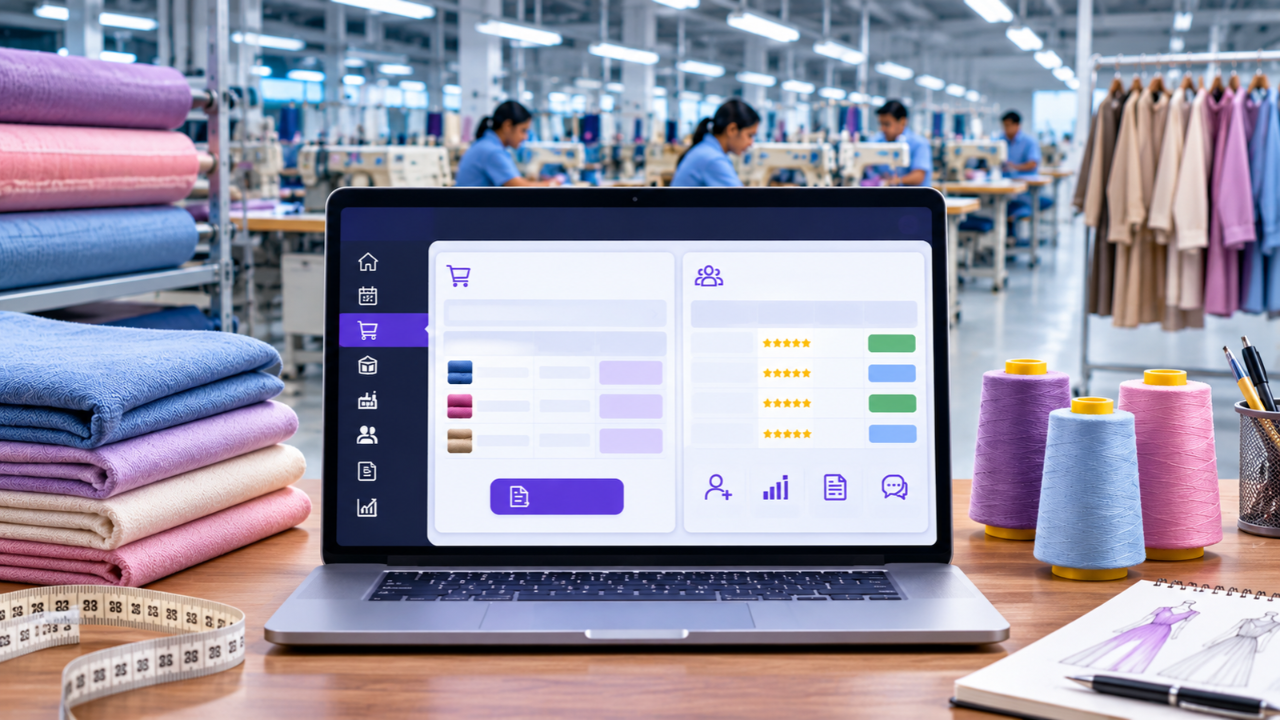
Raw material is the largest cost in textile manufacturing. Fabric, yarn, trims, and accessories decide both your margin and your delivery date.
Yet sourcing is often handled with spreadsheets, phone calls, and memory. Buyers chase quotes. Stores teams guess what is left. Orders go out late or in the wrong quantity.
At Accelon Technologies, we see this pattern in many textile and apparel units. The fix is not more effort from the buying team. The fix is better data and a connected system.
FashionNX is our ERP for textile manufacturers, built on SAP Business One. It turns demand into purchase order suggestions and keeps vendor information in one place. This blog explains how that works and why it matters.
Why Raw Material Sourcing Goes Wrong in Textile Manufacturing
Sourcing problems rarely come from one big mistake. They build up from small gaps in information. Each gap costs time or money.
Material Needs Are Calculated by Hand
A buyer reads the order sheet and works out fabric and trim needs manually. One style may have many sizes and colours. A small error in consumption multiplies across thousands of pieces.
The result is either a shortage that stops the cutting table or surplus stock that sits for months.
Existing Stock Is Not Visible at Purchase Time
Buyers often do not know what is already in the warehouse or on order. They purchase again to be safe. This inflates inventory and locks up cash.
In textile units, leftover fabric from earlier orders is common. Without clear stock data, it rarely gets used.
Lead Times Are Ignored
Fabric mills and trim suppliers each have different lead times. If the order goes out late, production waits. Air freight or rush charges then eat into the margin.
Vendor Information Is Scattered
Vendor rates sit in old emails. Delivery records sit with the stores team. Quality complaints sit in someone’s notebook. When a buyer must choose a supplier, there is no reliable history to guide the decision.
Price Comparison Is Slow
Comparing quotes across suppliers takes days when done manually. Many buyers repeat the same vendor out of habit. Better rates elsewhere go unnoticed.
How FashionNX Generates PO Suggestions
FashionNX runs natively on SAP Business One. Style data, bills of materials, stock, and purchase orders all live in one system. A PO suggestion is a system-generated recommendation of what to buy, how much, and by when. It is based on real demand and real stock. Here is how FashionNX builds it.
Demand Comes from Orders and BOMs
When a sales or production order is confirmed, FashionNX reads the bill of materials for each style. It multiplies the consumption per piece by the order quantity. Size and colour variants are handled automatically.
This gives an accurate gross requirement for every fabric, trim, and accessory.
Stock and Open Orders Are Netted Off
The system then checks available stock and open purchase orders. It subtracts both from the gross requirement. What remains is the true net quantity to buy.
This single step prevents duplicate purchasing. It also pushes your team to use existing stock first.
Lead Time Sets the Order Date
Each item can carry a supplier lead time. FashionNX works backward from the production date to suggest when the order must be placed. Buyers see which items are urgent and which can wait.
Suggestions Convert to Purchase Orders
The buyer reviews the suggestion list, adjusts quantities if needed, and converts the lines into purchase orders. There is no retyping of item codes or quantities. This saves time and removes data entry errors.
Minimum Stock Levels Trigger Alerts
For regular items such as threads, labels, and packing material, you can set minimum stock levels. When stock falls below that level, the system raises a suggestion. Your stores never run dry on small items that can halt a large order.
How FashionNX Handles Vendor Management
Good sourcing needs good supplier data. FashionNX keeps this data inside SAP Business One, linked to every purchase transaction.
A Single Vendor Master
Each supplier record holds contact details, payment terms, tax details, and the materials they supply. Your team no longer hunts through emails to find a rate or a GST number.
Rate History by Vendor and Item
FashionNX records the rate for every purchase. Buyers can see how a supplier’s price for a fabric has changed over time. They can also compare rates across vendors for the same material.
Delivery and Quality Performance
The system tracks promised delivery dates against actual goods receipt dates. It also records rejections raised at inward inspection. Over time, you build an objective view of which suppliers deliver on time and on specification.
Approved Vendor Control
You can restrict specific items to approved vendors. This is useful when a buyer or brand requires certified trims or compliant fabric. It keeps sourcing aligned with customer requirements.
Outstanding Payables in View
Because purchasing and accounts share one database, payables are visible against each vendor. Management can plan payments with full knowledge of what has been received and what is still pending.
Why Sourcing Discipline Protects Margin and Delivery
Material cost often makes up well over half of the cost of a garment. Even a small improvement in purchasing accuracy shows up directly in profit.
Delivery dates depend on material arrival. When a trim is missing, finished garments wait in the factory. Buyers then lose confidence, and penalties may follow.
A connected sourcing process addresses both issues. Purchases match real demand, so cash is not trapped in surplus stock. Orders go out on time, so production does not wait for material.
FashionNX gives your team this discipline through the system, not through extra follow-ups and reminders.
Benefits of FashionNX for Raw Material Sourcing
1. Material requirements are calculated from BOMs, so manual consumption errors are reduced.
2. Net requirement planning prevents duplicate purchases and encourages use of existing stock.
3. Lead time based suggestions help orders go out early enough to protect delivery dates.
4. Rush purchases and expedited freight charges come down.
5. Rate history supports better negotiation with suppliers.
6. Vendor performance data improves supplier selection and accountability.
7. Working capital improves because surplus stock is avoided.
8. Buyers spend less time on data entry and more time on sourcing decisions.
Why a Purpose-Built ERP for Textile Manufacturers Matters
Generic ERP tools treat an item as a single code. Textile manufacturing is different. A style has colours, sizes, fabric widths, shrinkage allowances, and wastage. Each of these affects how much material you need.
FashionNX is built around these realities. Its BOM logic, variant handling, and purchasing flow reflect how textile and apparel businesses actually work. That is why the PO suggestions are usable on day one and not just theoretical.
How Accelon Technologies Supports Your Implementation
We implement FashionNX as part of a complete SAP Business One deployment. Sourcing connects directly to inventory, production, costing, and finance.
Our team studies your current buying process first. We then configure BOM structures, item masters, lead times, and vendor records to match your operations. We train your buyers and stores staff, and we stay available after go-live.
Our goal is simple. Your purchasing team should spend less time chasing information and more time getting the right material at the right price.
Frequently Asked Questions
1. What is FashionNX
FashionNX is an ERP for textile manufacturers developed by Accelon Technologies on SAP Business One. It covers BOMs, purchasing, production, costing, and quality for textile and apparel businesses.
2. What is a PO suggestion in FashionNX
A PO suggestion is a system-generated recommendation of what material to buy, in what quantity, and by when. It is based on order demand, BOM consumption, current stock, and open purchase orders.
3. How does FashionNX calculate material requirements
FashionNX reads the bill of materials for each style and multiplies consumption by the order quantity. Size and colour variants are included. The result is the gross requirement for each material.
4. Does FashionNX consider existing stock before suggesting purchases
Yes. The system subtracts available stock and open purchase orders from the gross requirement. Only the net shortfall is suggested for purchase.
5. Can FashionNX account for supplier lead times
Yes. Lead times can be stored against items or vendors. FashionNX uses them to suggest order dates so that material arrives before production starts.
6. Can I convert PO suggestions directly into purchase orders
Yes. Buyers can review and edit suggestions, then convert them into purchase orders in SAP Business One. Item codes and quantities carry over without retyping.
7. Does FashionNX support minimum stock level alerts
Yes. You can set minimum stock levels for regular items such as thread, labels, and packing material. The system raises a suggestion when stock falls below the set level.
8. What vendor information can FashionNX store
The vendor master holds contact details, tax details, payment terms, and supplied materials. FashionNX also records rate history, delivery performance, and rejection data.
9. Can FashionNX compare rates across suppliers
Yes. Purchase rates are recorded for every transaction. Buyers can compare current and past rates for the same material across different vendors.
10. How does FashionNX track vendor delivery performance
It compares promised delivery dates with actual goods receipt dates. This gives an objective record of how reliably each supplier delivers.